Defining the Metaverse and Digital Entertainment

The metaverse is best described as a digital universe. There, people can interact with each other through avatars, they can also access different environments and participate in virtual activities. It is basically you living just like the real world, but a digital version.
The best part about the metaverse is that rather than being constricted to a single game or app, everything is connected. In short, there are no standalone platforms per se; rather, it is a whole ecosystem that brings everything together.
On a larger scale of entertainment, this initiative is bringing about the combination of gaming, social connectivity and media consumption in one place. That way, just by owning one VR headset, players can attend a concert, watch a movie with mutuals, or just explore spaces created by creators. It means that audiences are no longer passive viewers; they can also engage as they please.
Digital entertainment is basically building on regular things like streaming and playing games, making them more interactive and immersive.
The Role of Artificial Intelligence in Immersive Entertainment
It is safe to say that AI is the engine behind turning the metaverse idea into a permanent reality. With it, digital environments are more intelligent and adaptive; it basically makes it feel “alive.” And this is important for immersive entertainment. Here are the different ways in which AI is playing a big role:
- World simulation: With machine learning models, it is possible to create a global-scale virtual space filled with AI characters. These characters will have the ability to react in a dynamic way and give different outcomes. That way, they don’t feel like NPCs. Rather, they learn from patterns, hold conversations, and get better at it as more players engage them.
- Real-time personalization: This is important, so as not to create a generic one-size-fits-all platform. With real-time personalization, platforms can analyze individual preferences, patterns, social interactions, and even a bit of emotions. And the best part is that it’ll adjust in real-time. This is the best way for user experience to feel meaningful.
- AI-assisted creativity: Creativity is limitless when you have AI as an assistant. You can maximize tools to generate art, music, character animations. This doesn’t mean it’ll replace creators; rather, it’ll assist them in building content faster, while reducing the chances of burnout.
Aside from the visuals, a primary expectation of people is that around responsiveness and immersion. They don’t just want massive worlds; they also want realistic interaction and experiences that feel like the physical world.
Emerging Experiences in the Metaverse
So, right now, digital entertainment is no longer about “consuming content.” Rather, it is about “participating in” content. And what makes this shift possible is the metaverse. It promises creativity in ways that traditional media can’t, and here are some guaranteed trends:
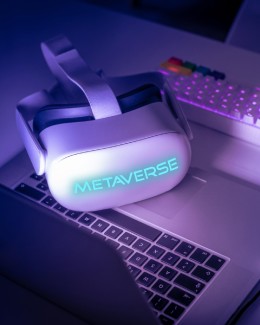
- Virtual live events: This involves concerts, sports watch-parties, live performances. The best part is that fans can equally gather to watch, just like they do for traditional events. Only that this time, there is no venue or geographical limit.
- Social VR communities: What everyone is accustomed to is scrolling through feeds of pictures and videos. However in the metaverse, you get to meet these people as avatars, irrespective of the environment you stay in. There, you can play games together, build spaces or just hang out.
- Virtual storefronts and brand worlds: On the business side of things, brands are not left out. Fashion labels, gaming companies, and film studios have the freedom to design their immersive spaces where fans can view their products, meet characters, and even unlock exclusive content.
These experiences are taking things to the next level because there are lesser restrictions. For instance, a musical artist can host a game-like concert. Or a movie premiere can actively involve interactive participation from viewers. The opportunities are limitless, and the boundaries are getting smaller.
Monetisation Models and Business Impacts
As the metaverse begins to go mainstream, it’ll also change the way companies generate revenue. If they want to stay afloat, they need to adapt to the new model of things.
With traditional models, companies relied on mostly one-time purchases and passive advertising. However, they have to level up to keep up with a more dynamic economy that will be built around digital interaction and ownership. Let’s discuss some ways that it’ll work.
Virtual Goods and Services
For starters, each brand will need to own a fair share of virtual goods and upgrades. This means users will spend on things like avatar customization, digital fashion, exclusive event access and different enhancement in virtual worlds. This will work because they are reflective of personality and social presence. It doesn’t matter that it is a digital space, people still want to look good and stand out, so they’ll spend on things that make them feel that way.
Subscription-Based Entertainment Hubs
We will also potentially see subscription-based entertainment hubs inside different platforms. It’ll promise premium experiences, event passes and a wider content library. Value will be tied to continuous engagement rather than single transaction. That is a major incentive for people to keep renewing their subscriptions.
Creator Economy
There will be a more decentralized approach to creators; they get better control to experiment freely. In this digital economy, they can build and also monitor things like:
- Personal worlds
- Skins
- Interactive stories
And the best part of it all is that they are selling directly to communities.
Financial Implications
The financial implications are beyond entertainment. We will now see tradable assets go fully mainstream. This already exists in the real-world, but in the metaverse, it’ll become a major thing. Users will be able to trade almost anything they own like virtual real estate and tokenized collectibles.
While some may argue that the value of such assets are usually speculative, businesses and investors are coming to terms with the fact that it is the future. And soon enough, digital ownership will equate to real-world value.
Consumer Behavior and Culture
Consumer behavior is also bound to change; after all, they are moving from viewers to active participants. They are no longer scrolling, rather, they are mutually creating their experiences for themselves.
So, definitely, one of the most noticeable changes will be the approach to social gatherings. With this innovation, they become shared events rather than solitary activities. Since distance is no longer a barrier, people will attend more events together. There’ll also be more community activities because it is now feasible.
The younger generation will be the major driving force behind this shift. Most of them are already familiar with things like digital fashion, avatars and even virtual achievements. So, going into the digital space, it becomes an extension of their personal identity and status.
Not to mention, the ownership of assets too has a new twist to it. People will be more attached to their digital assets, and that will create an additional emotional value in addition to the economic value. Users will make purchases not just for the sake of content, but for the attachment they have to it.
Let’s also not forget that convenience will no longer be a luxury that most people can’t afford. Since there are no geographical restrictions in the digital world, people can explore different far places conveniently from the comfort of their homes.
Basically, as entertainment becomes more “custom,” expectations too will continue to rise. Because of the flexibility, audiences are not necessarily looking to adapt, rather, they’d prefer the other way round.
Challenges, Risks & Ethical Considerations
Although the metaverse promises a new dimension to entertainment, it also comes with its challenges, which must be addressed. Here are some notable mentions:
- Accessibility: Truthfully, high-quality VR and AR experiences will require powerful hardware and strong connectivity. This may be a lot for several people, and in extension, it’ll limit participation for many.
- Platform fragmentation: This is a barrier that will make it difficult for people to move seamlessly between digital worlds. For it to work, developers have to work hand in hand to make sure too many things are not fragmented.
- Privacy concerns: For platforms like this, behavioral data is necessary for growth. This includes things like movement patterns, eye tracking, as well as emotional responses. And frankly, not everyone is comfortable with having all these collected. So, there has to be full transparency.
- Risks of addiction: Having a world on its own can be a form of escape for some. And in extension, many may become addicted to being in a world of their own. This also leads to things like social isolation.
Don’t get us wrong: the future is bright, but every good thing comes with its challenges and considerations. So, this innovation has to be matched with ethics and thoughtful governance.
Looking Ahead: The Future of Entertainment in the Metaverse
As AI evolves, the next phase will make digital worlds even more intelligent and deeply connected to each person’s real-world interests.
We’re going to see better AR and VR integrations; for instance, Augmented Reality can make it possible to integrate metaverse-style engagement into your daily engagements. So, you’ll get similar experiences in stadiums, museums, and even in the regular streets. That way, switching between physical and digital entertainment will feel more natural.
Virtual economies are also bound to witness a fair share of growth. With it, it’ll become connected to traditional assets and that will make it possible to classify investments in digital assets as a form of entrepreneurship on its own.
All these won’t happen in one day, but the vision is clear. With time, we’ll witness everything unfold before our eyes.
Wrap Up
The evolution of the metaverse, powered by AI, is coming into daily use; all it needs is time. With it, entertainment gets a new meaning, and users will become participants. That way, each person has the right to define what entertainment means to them. They can shape their experience and make things work as they want. Read more on Liberty Gaming.